
Sovereign risk profile · Kenya · 2026
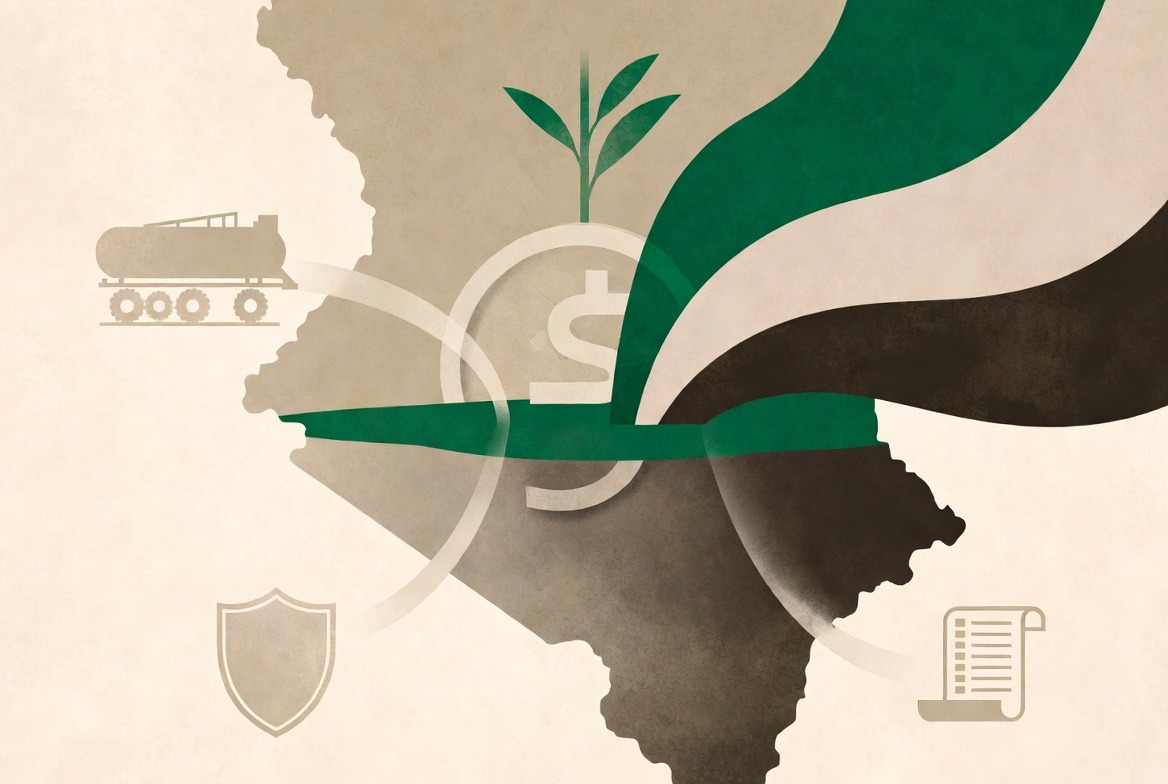
Kenya has held its currency remarkably steady while every structural pressure feeding into that stability keeps building underneath it. This profile maps the nine forces worth watching – pressures and offsets alike – and the single chokepoint that connects them.
Currency & reserve management
ModerateThe shilling has traded in an unusually narrow band against the dollar for roughly two years, a stability that looks organic from the outside but is being actively manufactured. The central bank has repeatedly stepped in with dollar sales at the first sign of pressure, most visibly during the 2026 Iran-linked shock, when it drew down close to a billion dollars in a single month to keep the rate from breaking through 130.
A defended currency is not the same as a strong one. Every intervention draws down the same finite pool of dollars that also has to cover fuel imports, debt service, and any future external shock – which is why reserve trajectory matters more here than the exchange rate print itself.
Sources: Bloomberg, EBC Financial Group, FX Leaders
Sovereign debt & fiscal space
ElevatedPublic debt has roughly doubled in nominal terms since 2019 and continues climbing against a legal anchor the government is required to hit by 2028 but is moving away from, not toward. Debt service alone now consumes more than two-thirds of annually collected revenue, which is the definition of fiscal space running out.
The hidden-debt wrinkle
In April 2026 the IMF pushed back on how Kenya classifies roughly KSh 335 billion (~$2.6B) in borrowing secured against future fuel levies, import duties, and passenger charges – financing that isn’t currently booked as debt on the government’s own ledger. If reclassified, the real position is worse than the headline ratio suggests, and the opacity itself is the kind of signal that makes multilateral lenders more cautious, not less.
Sources: The Kenyan Wall Street, IEA Kenya, EA Business World, AllAfrica / Budget Policy Statement 2026
Fuel supply concentration risk
Elevated & activeKenya imports its refined fuel under a government-to-government arrangement that channels the bulk of supply exclusively through Gulf producers, principally Saudi Arabia and the UAE. That concentration has turned from a theoretical risk into a live one over 2026, as the same conflict driving Kenya’s reserve drawdowns has repeatedly struck the refining and export infrastructure of its own suppliers.
- March 2026 – a drone strike hit Ras Tanura, Saudi Arabia’s largest refinery, halting propane and butane exports for weeks and forcing product exports to reroute through the Red Sea.
- July 2026 – Houthi strikes shut down the 400,000 bpd Jizan refinery until at least mid-August and damaged the Abqaiq complex, one of the single most critical nodes in global oil supply.
- The same wave of strikes hit Yanbu, which by 2026 had become Saudi Arabia’s only functioning crude-export corridor after Iran closed the Strait of Hormuz – handling roughly 92% of the kingdom’s seaborne crude exports as of mid-2026.
Every tanker leaving Yanbu still has to clear the Bab al-Mandeb strait, which sits inside a Houthi-declared blockade zone. That leaves Kenya’s exclusive supplier relationship exposed at both the production end and the shipping route, with no easy substitution given the G2G structure.
Sources: Wikipedia: 2026 Aramco refinery attack, Tech Times, CNN, Al Jazeera
Export shock: tea & the Iran corridor
Elevated & activeTea is one of Kenya’s largest single sources of foreign currency, and Iran has been a significant secondary buyer alongside Gulf states – together accounting for a meaningful share of the crop’s export value. The same conflict disrupting fuel supply has hit this earner directly and simultaneously, which is the detail that matters most for a reserves-focused risk view: it is not two separate shocks, it is one shock draining the reserve pool from both the import and export side at once.
Millions of kilograms of tea sat stranded in Mombasa warehouses through the disruption, with cargo rerouted around the Cape of Good Hope at far higher cost when it moved at all. Farmer incomes and export earnings are both exposed for as long as Gulf shipping lanes stay unreliable.
Sources: Daily Nation, CNBC Africa, People Daily
Domestic financial sector: the Sacco crisis
ModerateSavings and credit cooperatives are one of the most widely held investment vehicles in Kenya, and the sector took a serious governance hit with the collapse of KUSCCO, the umbrella body many Saccos relied on for pooled deposits. A forensic audit found KUSCCO’s liabilities of roughly KSh 17.7 billion dwarfing assets of about KSh 5.2 billion, exposing 247 member Saccos to losses running into the billions.
Regulatory response has been to cap payouts further while institutions rebuild capital buffers – some individual Saccos have been forced to more than halve member returns for 2025. The dividend compression itself isn’t the risk; it’s a visible symptom of a governance failure in a sector that a large share of ordinary savers treat as their safest available option.
Sources: Eastleigh Voice, Fintech Association of Kenya, Tuko
Political & electoral risk
Moderate–High, rising into 2027Kenya’s next general election falls in August 2027, but functionally the campaign is already underway, well over a year out – a longer live-risk window than a standard election-cycle model would price in. That window opened directly on top of the deadliest domestic unrest in years.
- The 2025 protests, triggered by a controversial Finance Bill and the death of a man in police custody, left 65 dead and over 1,500 arrested between June and July.
- The government passed a further Finance Bill in 2026 despite explicit fears of reigniting the same unrest, betting fiscal need against political risk right before an election cycle.
- Former Deputy President Rigathi Gachagua’s new opposition party is positioned to consolidate the populous Mt Kenya voting bloc against the incumbent.
- Kenya co-hosts AFCON 2027 with Uganda and Tanzania in the weeks immediately before the election – a real security and budget burden layered onto an already strained fiscal position, though also a possible goodwill card for the government if it goes smoothly.
Sources: The East African, Wikipedia: 2025 Kenyan protests, The Elephant
Local debt market: a warning in the yield curve
Worth watchingDomestic government securities have been heavily oversubscribed through 2026, with some Treasury bill auctions drawing bids at over 800% of the amount offered. Ordinarily that kind of demand would signal improving confidence – except the yield collapse it’s produced is running in the opposite direction of the underlying credit picture.
Debt-to-GDP kept climbing over the same window the yield was falling. That divergence is more consistent with captive local demand – banks and pension funds with excess reserves and few alternative places to put shilling liquidity – than with a genuine repricing of sovereign risk. Captive demand is fragile: it can reverse quickly if those institutions need liquidity elsewhere at the same time, which is exactly the kind of correlated stress a reserve shock could trigger.
Sources: Rio Times, Trading Economics, People Daily
State asset sales: a shrinking lever
Moderate – running out of roomFacing the same fiscal squeeze documented above, the government has turned to selling stakes in its most valuable state-linked companies rather than raising taxes further or borrowing more. The centerpiece is Safaricom, the one asset large and profitable enough to move the needle on its own.
The Kenya Ports Authority sale is structured differently and worth distinguishing from Safaricom: KPA itself isn’t being sold. Under the new “landlord model,” the government retains all port land, berths, and infrastructure while leasing specific terminal operations (Mombasa berths 11–14, Lamu berths 1–3) to private operators for a 25-year concession fee – closer to a long-term lease than a divestiture, though workers and opposition figures have raised the same concerns a full sale would.
Why the runway is short
Treasury officials have said openly that Safaricom was the only “big-ticket” asset attractive enough to sell without new taxes – most other state corporations are either loss-making or structurally unfit for a clean sale. Once the Safaricom proceeds and the port concession fees are booked, the pipeline of comparably valuable, comparably clean assets left to monetize is thin. This is a lever that works once at this scale, not a repeatable source of reserve support.
Sources: Daily Nation, IT Edge News, Bana, The Kenya Times
Credit rating: better, still speculative-grade
Moderate – improving trend, low baseKenya’s rating trajectory has genuinely turned a corner, which is worth weighing fairly against the risks above rather than only stacking negatives.
All three sit within the “speculative” (junk) band, several notches below investment grade, but the direction of travel matters: Moody’s cited rising reserves, a narrower current account deficit, and successful 2025 Eurobond issuance – including a buyback of $1.2 billion in bonds maturing 2026–28 that pushed the next major Eurobond maturity out to 2030 – as reasons for the upgrade. That refinancing cushion is a genuine, concrete de-risking event; it buys time that the country didn’t have two years ago. The same agency was explicit, though, that the rating remains capped by weak debt affordability, high domestic borrowing costs, and slow fiscal consolidation – the upgrade reflects reduced near-term default risk, not a resolved debt trajectory.
Sources: Bloomberg, CNBC Africa, Forbes, Trading Economics
Synthesis
One chokepoint, not seven risks
Read individually, these look like nine separate line items. Read together, four of them draw on the exact same finite resource at the exact same time: foreign exchange reserves. Pricier fuel imports, disrupted tea export earnings, defensive currency intervention, and dollar-denominated debt service are all pulling from the same $12–14B pool – and the current squeeze on two of those inputs (fuel and tea) traces back to a single live conflict, not four independent events. The Safaricom sale and improved credit rating are the two genuine offsets to that pressure – one a one-off cash injection, the other cheaper future borrowing – but neither is repeatable at the same scale if the reserve drain continues into 2027.
The individual risks are each manageable on their own. What isn’t priced into most surface-level commentary is that they draw on the same finite resource at the same time – which is the difference between a country with several small problems and a country with one large one wearing several disguises.
The practical implication: reserve trajectory over the next two to three quarters is the single most informative number in this whole profile. If it stabilizes or rebuilds even as the Middle East conflict continues, most of the other risks stay contained. If it keeps drawing down while debt service, an open campaign season, and a still-healing Sacco sector all persist in the background, the correlated nature of these pressures is what would turn a difficult year into a genuine currency or debt event.

Leave a Reply